Mexico is one of the world's megadiverse countries, home to an estimated 10–12% of global species and exceptionally high levels of endemism. Its forests, wetlands, coastal and marine ecosystems and other natural landscapes provide essential services that support livelihoods, food and water security and economic development. Much of the country's biodiversity-rich territory is managed by Indigenous Peoples, local communities and ejidos, making community governance and sustainable livelihoods central to biodiversity conservation.
Despite its extraordinary natural wealth, Mexico faces significant pressures from land-use change, ecosystem degradation, unsustainable production and climate change. Mobilizing sufficient resources for biodiversity cannot be achieved through public budgets alone. It requires improving the effectiveness of existing expenditure, addressing financial flows that negatively affect nature and mobilizing additional resources from the private and financial sectors.
UNDP BIOFIN works with the Government of Mexico, subnational authorities, financial institutions, businesses and other partners to strengthen the country's biodiversity finance architecture. The programme supports solutions ranging from Payments for Environmental Services and sustainable finance for protected areas to bioeconomy investment, subnational finance, Nature-based Solutions and the integration of biodiversity-related risks and opportunities into financial decision-making.
Through these efforts, Mexico has mobilized nearly US$22 million for biodiversity finance and developed a growing portfolio of mechanisms to align public and private financial flows with nature. UNDP BIOFIN is also helping strengthen biodiversity finance at the subnational level and deepen engagement with the financial sector, supporting Mexico's transition from identifying the biodiversity finance gap to implementing and scaling solutions that deliver benefits for nature, communities and the economy.
22M
Finance Mobilized
Mobilized for biodiversity through UNDP BIOFIN-supported finance solutions in Mexico.
2,946
people
directly supported through networking and training
15
subnational entities
receiving advisory services and collaboration
$289
Million
ere mobilized through local Payment for Ecosystem Services (PES) mechanisms through matching-fund schemes in 2018
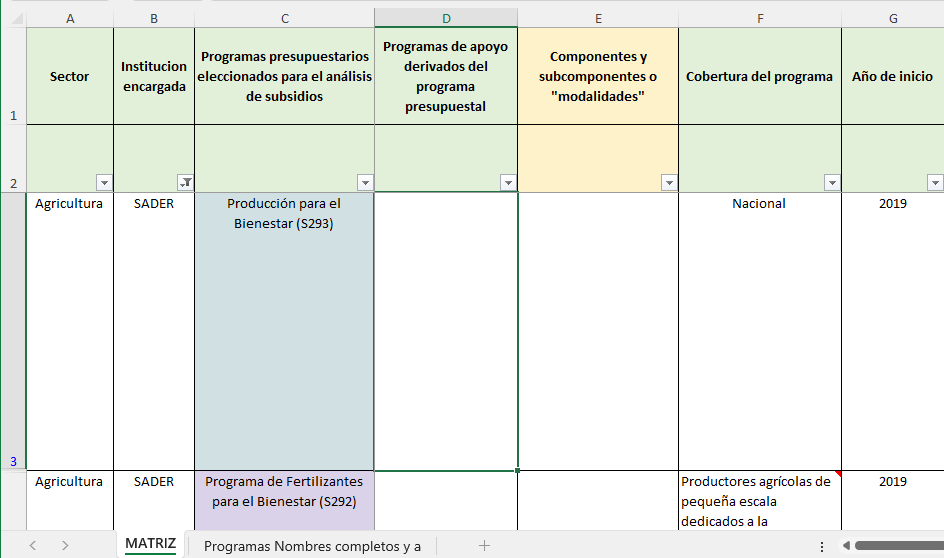
UNDP BIOFIN supports the integration of biodiversity into public policies, budgets and financial flows across key economic sectors, including agriculture, livestock, forestry, fisheries and tourism. The solution focuses on improving the effectiveness of public expenditure, incorporating biodiversity criteria into sectoral policies and programmes, identifying opportunities to reform incentives that may negatively affect biodiversity, and strengthening biodiversity expenditure tracking at federal and subnational levels.
The approach has contributed to institutionalizing biodiversity expenditure analysis and strengthening the evidence available to decision-makers to better align public resources with Mexico's biodiversity priorities.
2. Climate and Biodiversity Finance
UNDP BIOFIN works to strengthen synergies between climate and biodiversity finance by promoting financial mechanisms that can simultaneously support ecosystem conservation, restoration and climate resilience. This includes Nature-based Solutions, carbon finance and emerging nature-market mechanisms, as well as efforts to connect biodiversity-positive projects with appropriate public and private sources of finance.
More recently, UNDP BIOFIN has supported capacity development on biodiversity credits, environmental compensation and habitat banking, helping stakeholders assess the financial, technical and regulatory conditions required to develop credible nature-finance mechanisms in Mexico.
3. Strengthening Biodiversity Finance at the Subnational Level
UNDP BIOFIN supports state and local governments to develop and implement biodiversity finance solutions tailored to their priorities. Beginning with Mexico City and subsequently expanding to states including Jalisco, Guanajuato and Yucatán, the programme has supported Biodiversity Finance Solutions Plans, strengthened public environmental funds, promoted more efficient expenditure and helped establish mechanisms such as Green Investment Offices.
This work is helping subnational governments diversify financing sources, strengthen institutional capacity and integrate biodiversity finance into public planning and investment.
4. Bioeconomy and Nature-Positive Businesses
UNDP BIOFIN supports businesses and entrepreneurs whose activities depend on the sustainable use of biodiversity or generate positive outcomes for ecosystems and communities. The approach combines business development, technical assistance and access to finance to help build a stronger pipeline of investable biodiversity-positive enterprises.
Through the Bioeconomy Acceleration Fund, more than 190 businesses and projects applied for support, with 10 selected to receive financing and technical assistance. The solution demonstrates how private investment and entrepreneurship can complement public finance while generating economic, social and biodiversity benefits.
5. Greening the Financial Sector
UNDP BIOFIN works with financial institutions, regulators, development banks and other partners to integrate biodiversity-related risks, dependencies and opportunities into financial decision-making. The programme has supported research and recommendations on biodiversity-related financial risks and helped strengthen the enabling environment for directing more public and private capital toward nature-positive investments.
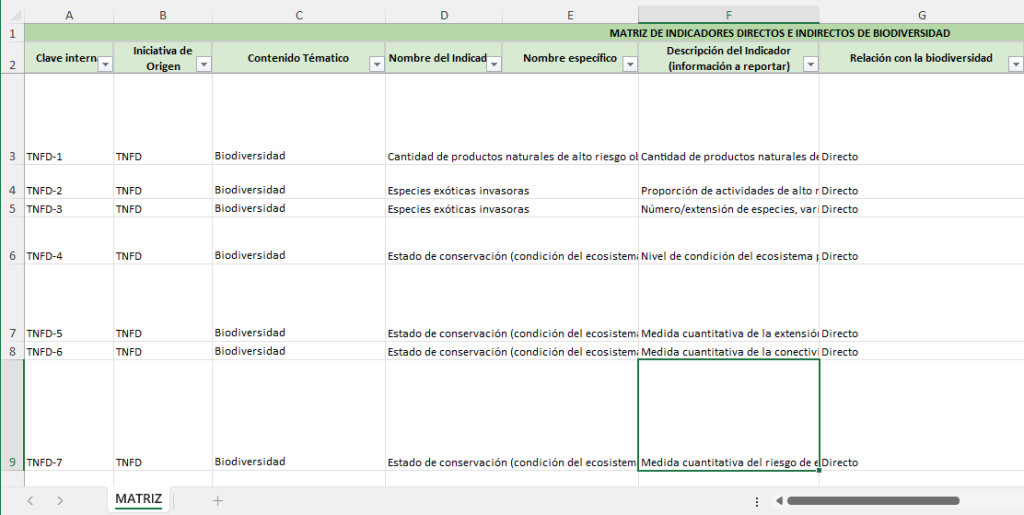
This work has expanded significantly in recent years. In 2026, UNDP BIOFIN co-launched the TNFD Consultation Group Mexico, bringing together financial, business and public-sector actors to advance the identification, management and disclosure of nature-related risks and opportunities. UNDP BIOFIN is also supporting financial institutions to move from awareness to investment through capacity development on Nature-based Solutions and connections with investable projects.
Cross-cutting: Biodiversity Finance Roundtable
Across these five finance solutions, UNDP BIOFIN, KfW and WRI Mexico coordinate the Biodiversity Finance Roundtable, which brings together public institutions, development banks, international cooperation agencies, civil society organizations and financial intermediaries. The platform identifies opportunities to mobilize repayable finance and other financial instruments for projects with positive biodiversity impacts and helps address barriers between biodiversity projects and potential sources of capital.
Key results
Mobilizing Finance for Protected Areas
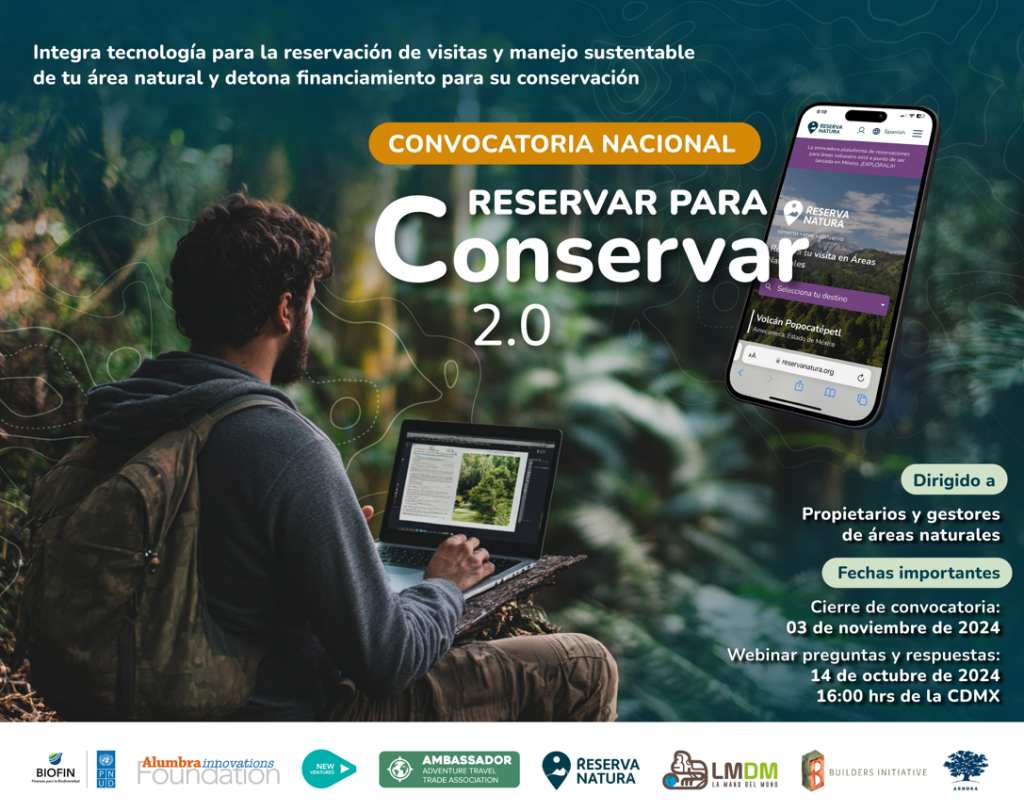
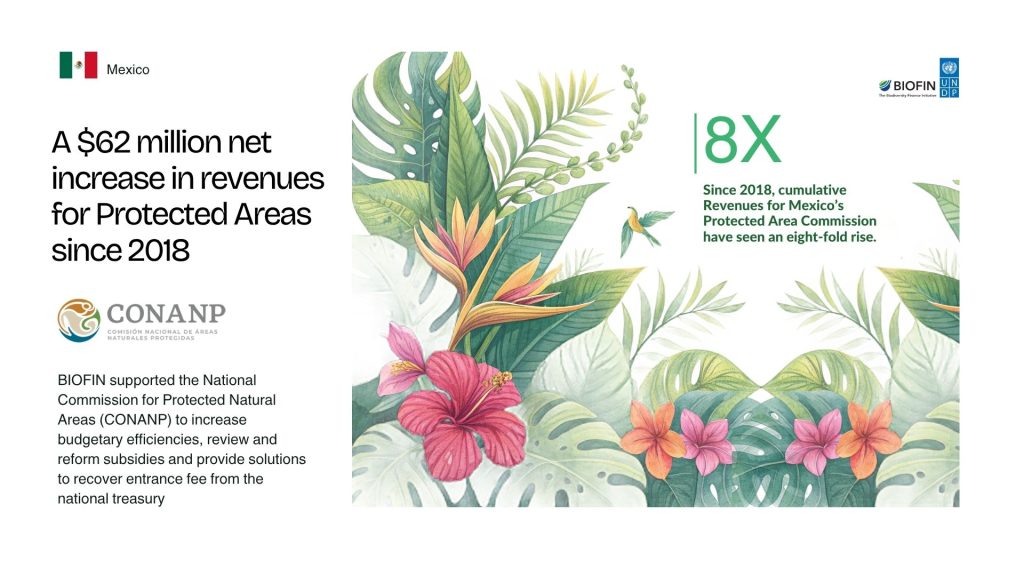
UNDP BIOFIN supported Mexico’s National Commission of Natural Protected Areas in strengthening the use of protected-area entrance fees for conservation, helping leverage approximately US$2 million in additional resources. The initiative demonstrates how existing revenue mechanisms can be improved to strengthen the financial sustainability of Mexico’s protected areas.
Mobilizing Finance through Payments for Environmental Services
UNDP BIOFIN helped mobilize approximately US$294,000 from irrigation districts through matching funds for Payments for Environmental Services. The mechanism contributed to the conservation of approximately 7,300 hectares, demonstrating how beneficiaries of ecosystem services can contribute directly to financing their conservation.
Financing Biodiversity-Positive Businesses
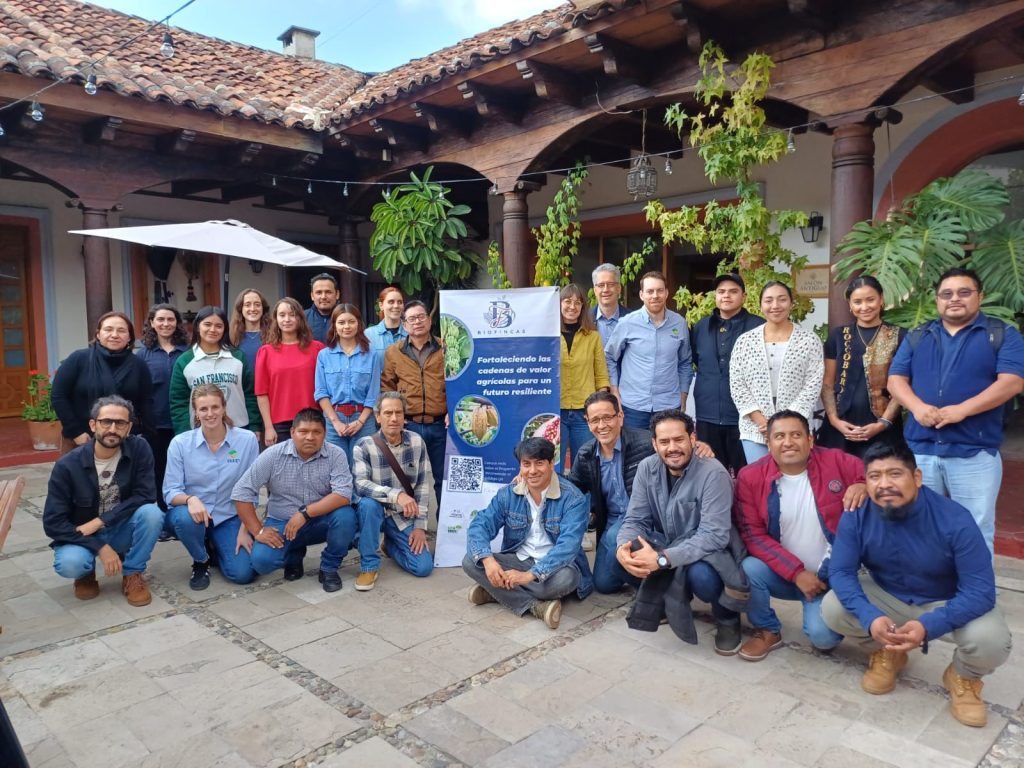
UNDP BIOFIN supported the creation of the Bioeconomy Acceleration Fund to connect finance and technical assistance with businesses generating positive outcomes for biodiversity and communities. The initiative received more than 190 applications, with 10 projects selected for financing and technical assistance, helping demonstrate viable business models based on the sustainable use of biodiversity.
Developing a Sustainable Fund for Biodiversity
UNDP BIOFIN supported the design of a Sustainable Fund as a financial mechanism capable of channeling international and national, public and private resources toward biodiversity priorities. The initiative contributes to diversifying Mexico’s biodiversity finance architecture and creating mechanisms capable of attracting additional sources of investment for nature.
Scaling Biodiversity Finance at the Subnational Level
UNDP BIOFIN has supported the development of Biodiversity Finance Solutions Plans and implementation of finance mechanisms at the subnational level. This work has contributed to strengthening public environmental funds, establishing Green Investment Offices, improving expenditure efficiency and aligning public policies and financial flows with biodiversity priorities in states including Guanajuato, Jalisco and Yucatán, as well as Mexico City. UNDP BIOFIN Mexico
UNDP BIOFIN supported the integration of the Biodiversity Expenditure Review methodology into Mexico’s national statistical system, strengthening the country's capacity to systematically track public expenditure related to biodiversity. This provides government institutions with stronger evidence for planning, budgeting and biodiversity finance decisions.
Bringing Biodiversity into the Financial Sector
UNDP BIOFIN has developed recommendations for integrating biodiversity into financial-sector policies, principles and standards and is working with financial institutions, regulators and development banks to strengthen nature-related financial practices. This work is helping create an enabling environment for financial institutions to better assess biodiversity-related risks and opportunities and direct more capital toward nature-positive activities.
Strengthening Collaboration on Biodiversity Finance
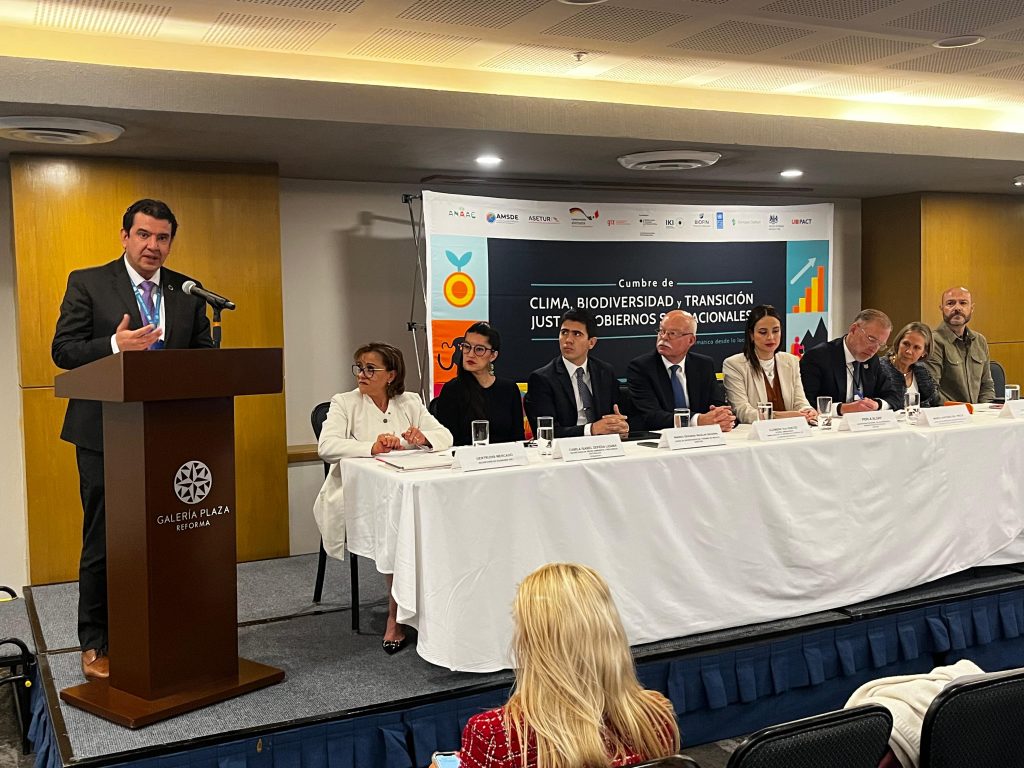
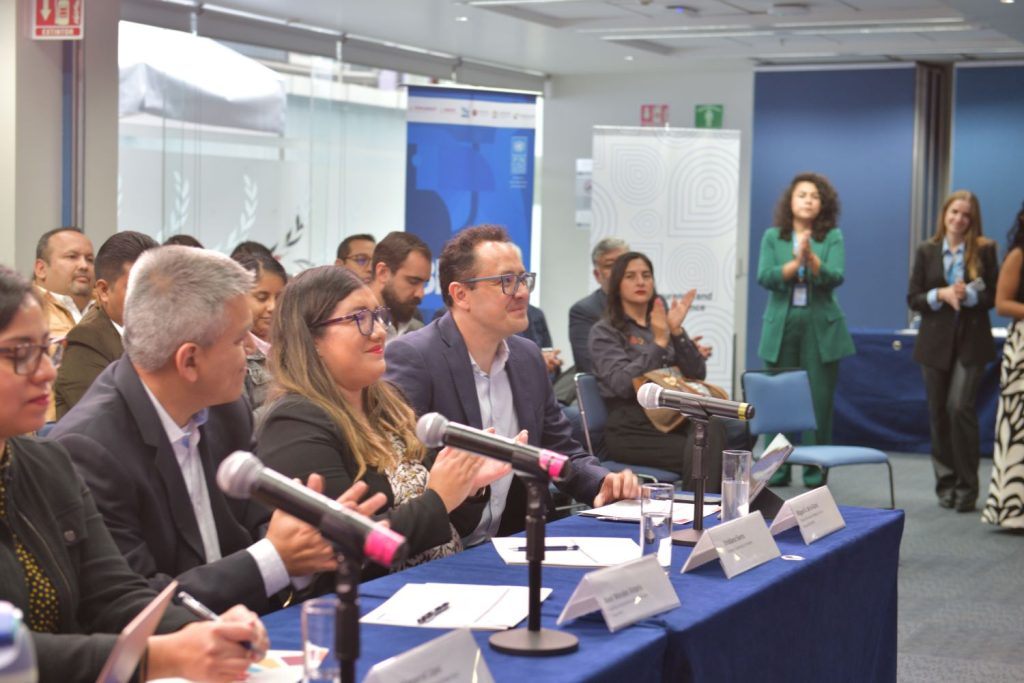
UNDP BIOFIN has helped bring together government institutions, development banks, international cooperation agencies, financial institutions, civil society and other partners to identify opportunities for scaling biodiversity finance. Through initiatives such as the Biodiversity Finance Roundtable, partners are exploring financial instruments and investment pathways that can mobilize additional public and private resources for biodiversity.
Advancing Private-Sector Action for Biodiversity
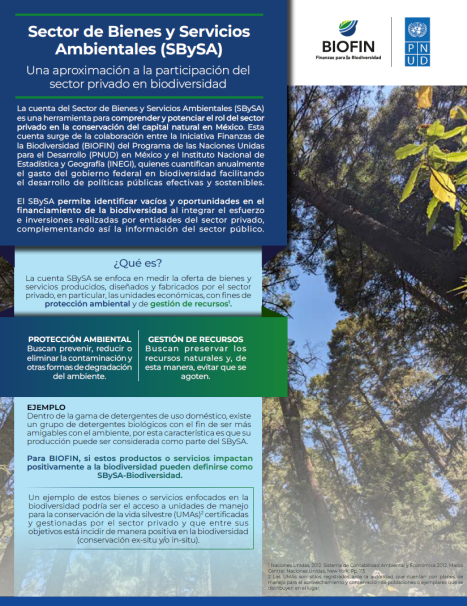
UNDP BIOFIN and partners are supporting implementation of Mexico’s National Biodiversity Target 15, strengthening the enabling environment for businesses and financial institutions to integrate biodiversity into their strategies and decision-making. This work contributes to aligning private financial flows with Mexico’s national biodiversity priorities and the Kunming–Montreal Global Biodiversity Framework.
Key documents
State of the review: Completed.
Findings:
The implementation of the BER in Mexico resulted from a collaboration between BIOFIN and INEGI, which led to the development of a harmonized methodology; this enabled its institutionalization as part of the Economic and Ecological Accounts of Mexico produced by the Institute. Furthermore, BIOFIN produced three reports analyzing these results at the national level. Additionally, the calculation methodology was implemented at the subnational level, taking into account the autonomy of state governments regarding the presentation of information in their public accounts and the management of their financial resources. These results include three published studies for Mexico City, Guanajuato, and Jalisco.
Findings: Biodiversity public policy and institutions face several challenges in Mexico. Despite there are many institutions which have biodiversity conservation and sustainable use attributions, there is still some work to do towards a better coordination among them. Currently, there are coordination mechanisms such as CONABIO, CIMARES (National Commission for Oceans), and CIBIOGEM (National Commission for Biosecurity) however their level of consolidation should be strengthened. Effective coordination mechanisms with better institutional embedding could enable the biodiversity sector to collaborate efficiently and promote mainstreaming biodiversity policies within other sectors. The national regulatory framework needs to be carefully revised in order to harmonize the wide range of conservation and sustainable use definitions within the different laws. Additionally, national planning processes need to be pushed towards continuity since public policies and instruments are subject to changes from one year to another. Hence, changes in the incentives of public programs that affect biodiversity become difficult to trace. Finally, the mainstreaming agenda in Mexico has become a crucial opportunity for strategic sectors to internalize the costs of biodiversity loss.
The estimation of finance needs for biodiversity is around USD 461.9 million per year during the period 2017-2020, which represents an increase of 46.7% to biodiversity spending, based on the one exercised during 2015. The finance needs assessment includes: 1) Protected Natural Areas financial gap calculated in 60 million per year estimated by CONANP; 2) The needs of financing to cover the Payment for Environmental Services (PES) demand estimated at USD 202.1 million by CONAFOR; 3) The National Biodiversity Strategy and the Action Plan (NBSAP- ENBIOMEX) finance needs estimated at USD 191.4 million.
Another result of the finance needs assessment was that 76% of the required resources are current expenditure and 24% are investment spending.
BIOFIN's FNA has helped to establish a path of implementation for the ENBIOMEX and has shown the required resources for its implementation up to 2020.
Scoping interviews have been conducted with government officials and environmental financial experts. Consultant’s meetings and workshops have taken place to integrate the results of previous BIOFIN’s components with the Finance Plan. Some of the elements for the Biodiversity Financial Plan include the previous analysis of the current status which consist of the main drivers of biodiversity-harmful impacts; the biodiversity financing gap and programs that encourage biodiversity’s loss; the mapping of current sources of funding for the protection of biodiversity and the financing priorities; and financial guidelines for private and development banks to integrate environmental and biodiversity considerations in their investment portfolios.
The private sector involvement is another key factor for the financial sustainability of biodiversity, therefore it is a fundamental part of the BFP. Another relevant point is the prioritization of biodiversity in the national budget planning, which is directly linked with the efficient use of public resources. In addition, the integration of public and private banks is a fundamental part for the channeling of resources.
The Plan will also focus in the strategic on key financial instruments and their enabling conditions to increase funding on biodiversity conservation. Additionally, synergies and alignments through other schemes and mechanisms are being explored in order to identify potential resources that can be eventually channeled to biodiversity conservation or sustainable use.
Moreover, BIOFIN MX is playing a significant role in facilitating a dialogue on the alignment of sources, agents and instruments to improve access to project financing. Finally, BIOFIN MX is currently working in developing concrete proposals for resource mobilization while identifying: a) Source of resources b) Mechanism for channeling resources c) Instruments d) Expected financial result e) and institutional arrangements.
The BFP recognized that there is previous national experience of many instruments and mechanisms of public, private and public-private partnerships that have managed to generate and leverage additional resources to public budgets. Taking into account these mechanisms, the biodiversity finance solutions proposed by BIOFIN Mexico are the following:
Mainstreaming of biodiversity in productive sectors, such as agriculture, tourism, fisheries and forestry. However, this finance solution also includes the Green budget based on results aligned to Sustainable Development Goals (SDG), to improve the result based planning through modification of the design, rules of operation and indicator matrix of budgetary programmes related to biodiversity and align them to the SDG.
Climate and biodiversity finance. This includes the strenghtening of the Climate Change Fund, as a tool to leverage resources from national, international, public and private sources. Another mechanism is to fund projects of environmental infrastructure and/or ecosystem-based adaptation issues through the Environmental Programme of the National System of Public Investment (SNIP for its spanish acronym), whose purpose is financing conservation, biodiversity, restoration and pollution remediation projects.
Finance mechanisms for conservation, which are mainly to increase the local mechanisms for the payment of environmental services programme of the Forestry Commission, and to develop conservation local mechanisms in Protected Areas.
Impact investment and sustainable businesses, to generate a profitable portfolio of sustainable use projects that can be multiplied and scalable, so that resources from private sector could be channeled to biodiversity.
Greening the bank. This solution includes mechanisms such as facilitating the implementation of an Environmental and Social Risk Management System (SARAS for its spanish acronym) in the financial sector, through guidelines and clear indicators. The emission of green bonds is another mechanism to anchor a portfolio of productive projects of restoration or green infrastructure for biodiversity and ecosystems.
These groups of finance solutions are not exhaustive and can be complemented with with support solutions such as a coherent international finance vision and economic and finance evaluations.